top of page

Cape Town Reflections

In 2024, I traveled to Cape Town, South Africa. When I landed, I was met with a mix of excitement and unease - I didn't know what to expect. How could a city capture so much beauty and encourage reflection on its brutal history at the same time. I was worried, but I wanted to know whether it was possible. Cape Town is often sold as a postcard city with coastlines, wine country, sunsets over mountains, but the underlying historical reality is far more layered. It is a place where breathtaking beauty and brutal history exist side by side, never fully separate, and always in conversation. I came to understand the typology and morphology behind the city more through three moments:
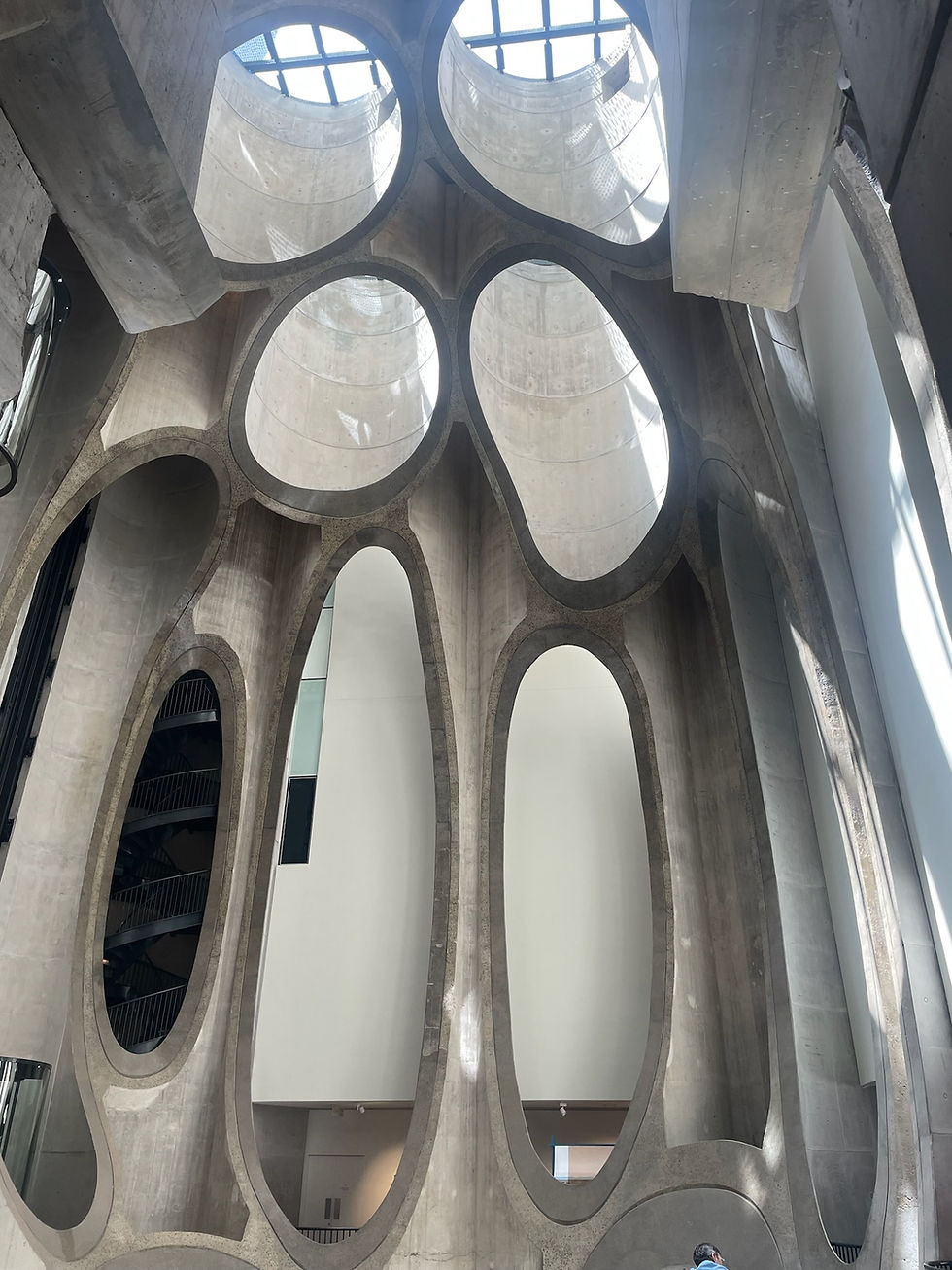

Having a background in architecture, I was enamored by the Zeitz Museum of Contemporary Art Africa (MOCAA). Designed by repurposing a grain silo at the V&A Waterfront, the architects and engineers sliced the silos to create navigable open space where abandoned silos once stood side by side. The architects hid staircases and elevators within the space of the silos and promoted interstitial moments throughout the museum. However the building itself is a reminder of colonial extraction, where grain was once shipped out so that wealth could be accumulated elsewhere. Today, the structure holds contemporary art from artists throughout the African Diaspora, and reclaims space both physically and symbolically. Many of the exhibitions were not gentle, they addressed identity, land, violence, memory, and resistance. It wasn’t a portrayal of Africa curated for outsiders’ comfort; it was complex, political, and deeply rooted in lived experiences. The museum made it impossible to separate aesthetics from history; beauty here was sharpened by honest reflections and untold truths. Standing inside Zeitz MOCAA, I began to understand that Cape Town’s story is not just about what happened in the past, but about who gets to narrate its history today.
When I shared with friends that I was visiting Cape Town I was encouraged to visit the Township communities on the outskirts of the city. The contrast between the general city area/MOCAA and the Khayelitsha Township was eye opening and necessary. I have strived to tackle housing insecurity within the United States but witnessing housing insecurity in a global context certainly strengthened my perspective and understanding of the global crisis. The township I visited,  often euphemistically described as a “settlement” or “slum” revealed the physical imprint of apartheid that still structures daily life in Cape Town. These communities were not accidents; they were designed and sustained by a local government that promotes urbanization and tourism. Forced removals, racial zoning, and decades of systemic neglect created neighborhoods that remain under-resourced and marginalized long after apartheid officially ended. Many of the residents in this community commuted into the city to work jobs that were intertwined with tourism. What felt most unsettling was the duality of proximity, communities were close and far apart at the same time. Much of the aftermath of the painful history was hidden, and the luxury apartments, tourist districts, and informal housing existed within minutes of each other, often dispersing further and further outward as one veered away from the city. This proximity made inequality impossible to ignore. People were living lives within social constraints imposed and upheld by a flawed ideology. The townships weren't a relic of history, they were acknowledgment that history was still unfolding and there is much more work to do.

Hiking Table Mountain was a moment where my reflections and curiosity came together. From above the clouds, Cape Town looks beautiful: the ocean wraps the city, neighborhoods are stitched together by roads, and the landscape is both bliss and dramatic. It wasn't hard to romanticize the city and see it as whole and harmonious, but knowing the history and witnessing the built environment beneath the mountain changed the glamor of the view. I could trace the invisible lines of inequality, which areas were dense, which were sprawling, which areas hugged the mountain and which were pushed outward. The mountain itself felt indifferent, clearly unmoved by human systems of oppression, yet it offered perspective. The hike wasn’t about conquering nature; it was about being humbled by context that I did not have much perspective about. 


Cape Town is beautiful, creative, and kind; it is also shaped by violence, dispossession, and unresolved injustice. I witnessed how these contradictions did not cancel each other out, but coexisted. My three momento's are not separate stories, they are the same story, told from different angles. Cape Town is not a city you passively consume…it asks you to look longer, think harder, and resist narratives. Leaving, I realized that my first trip to Africa wasn’t defined by novelty, but by responsibility: to remember what I saw, and to tell the story honestly.


Comments


©2025 by Cornell CRP 1101 The Global City
.

bottom of page